
Why two names?
The Act talks about surveyors making an award to settle a dispute. To most people, a document that binds both sides sounds like an agreement, so that name stuck. Searches, estate agents and builders mostly say "agreement".
Is it really an agreement?
Not quite. The owners do not negotiate it or sign it. The surveyor or surveyors make it under the Act, and both owners are bound by it unless one of them appeals, which has to happen in the county court and within 14 days.
When you need one
- when the neighbour says no to a party structure or excavation notice
- when the neighbour does not reply within 14 days, which counts as dissent
- when a disagreement crops up later, such as a damage claim after the neighbour had consented
Where the neighbour gives written consent, there is no dispute to settle and so no award.
How an award comes about
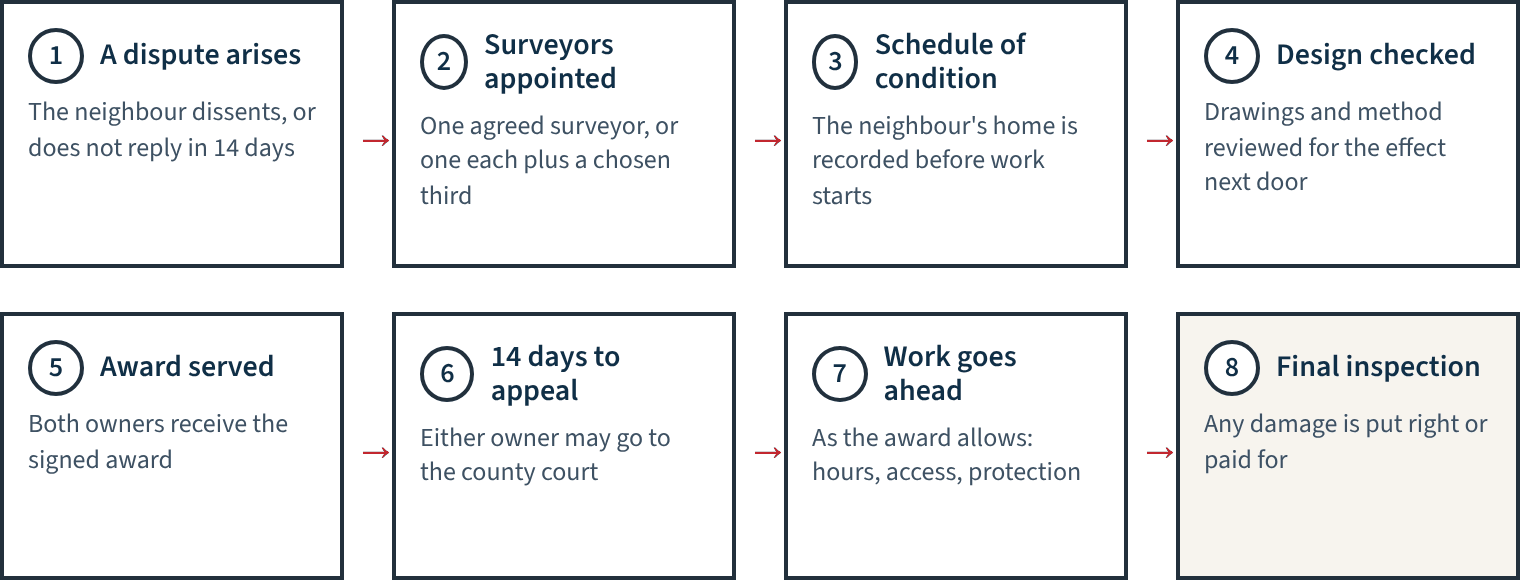
What makes it valid
An award is only as sound as the steps behind it: properly served notices, properly appointed surveyors, and an award that deals only with matters the Act allows. That is why the paperwork at the start matters so much.
Guides on surveyors, awards and disputes
- Party wall disputes: how they are settledWhat "dispute" means under the Act, and the route to settling one.
- How long does a party wall agreement last?No expiry date, but tied to its notice and to specific work.
- Can I act as my own party wall surveyor?No, and who can be appointed instead.
- Does a party wall surveyor need qualifications?None are required by law, so here is what to look for.
- What does a party wall surveyor actually do?Their work, step by step, from paperwork to final inspection.
Where this comes from in the Act
Links go to the official text of the Party Wall etc. Act 1996 on legislation.gov.uk.